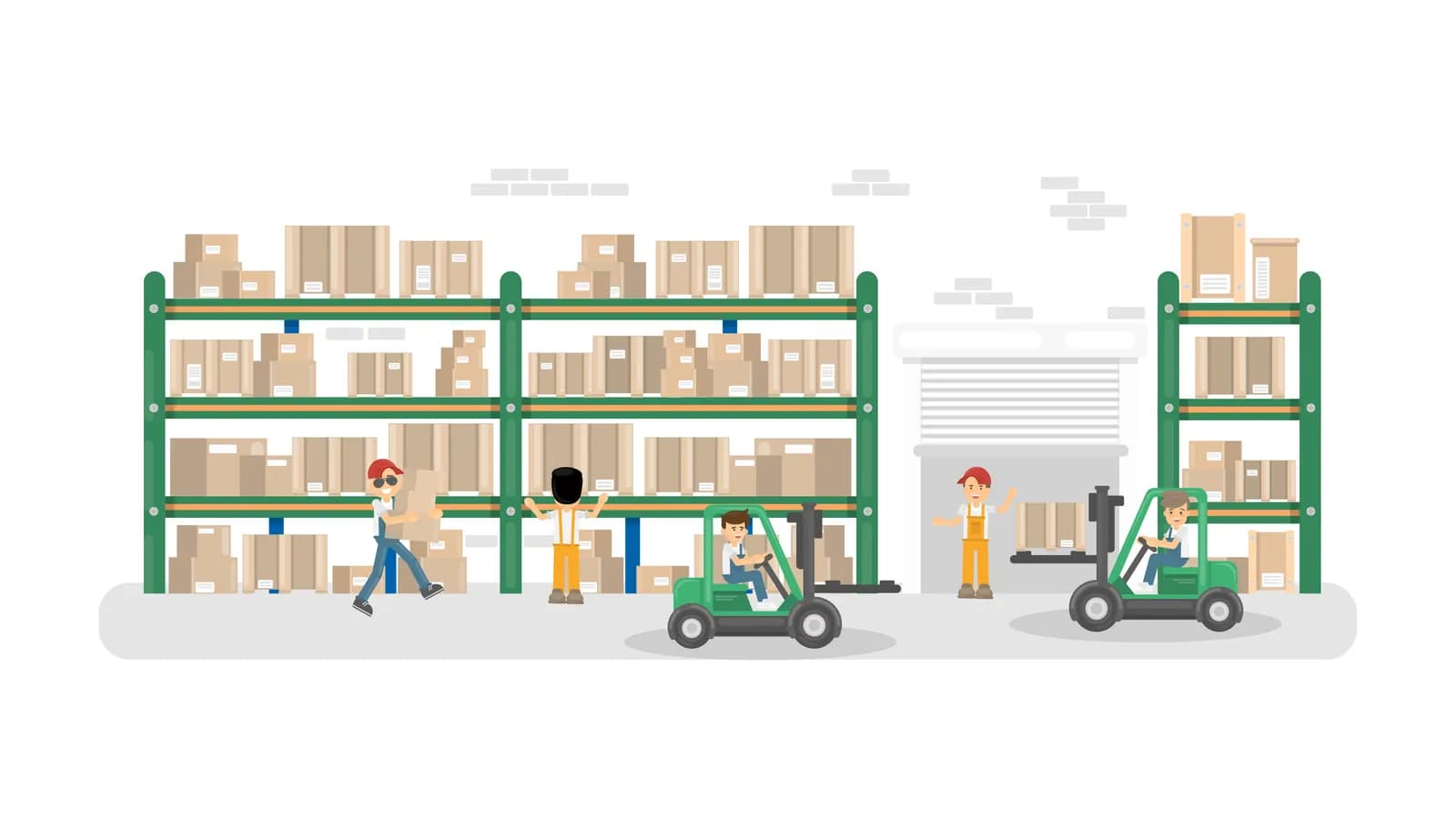
What Is Order Picking? Types, Pros and Cons, and How to Choose a Strategy
Order picking is retrieving items from storage to fulfill customer orders. Compare discrete, batch, wave, zone, and cluster picking to choose the right strategy.
By Tim Advotics · · Updated · 3 min read

Key takeaways
- Order picking is retrieving items from their storage locations in the warehouse to match customer orders, before packing and shipping.
- Picking is often the most time-consuming warehouse activity, largely because of travel time between racks.
- Five main strategies: discrete, batch, wave, zone, and cluster picking — each suits different order volumes and warehouse types.
- Pick-location recommendations (for example FIFO) and barcode scanning reduce mis-picks and speed up the process.
Order picking is retrieving items from their storage locations in the warehouse to match customer orders, before the goods are packed and shipped. Picking is one of the most time- and labor-intensive warehouse activities — mostly because staff have to walk from rack to rack.
The right picking strategy combines three things: how orders are grouped, the picking route, and the equipment used. Get the mix right and orders ship faster while the workload on staff drops.
What types of order picking are there?
Discrete picking (single order picking)
Staff pick one order at a time, start to finish, then move on to the next.
- Pros: simplest, easy to track, low risk of mixing orders.
- Cons: the most walking; inefficient at high volumes.
Batch picking
Staff pick for several orders at once that share similar SKUs, then sort items per order.
- Pros: fewer repeat trips to the same rack; productive for many orders with similar SKUs.
- Cons: needs a sorting step after picking.
Wave picking
Picking is scheduled in time-based waves — for example by truck departure or shift change — without requiring shared SKUs.
- Pros: aligned with shipping schedules; a more predictable workload.
- Cons: needs good planning and re-checking of product codes and quantities.
Zone picking
The warehouse is split into zones, and each picker works only in their zone. Orders move from zone to zone until complete.
- Pros: pickers know their zone well; parts of an order can be picked in parallel.
- Cons: busy zones can become bottlenecks.
Cluster picking
Pickers push a cart with several totes — one tote per order — and pick for all those orders in one pass.
- Pros: saves travel like batch picking, without a separate sorting step.
- Cons: best for small orders; needs carts and clearly labeled totes.
How do you choose the right strategy?
| Strategy | Best for | Travel | Complexity |
|---|---|---|---|
| Discrete | Small warehouses, few orders | High | Low |
| Batch | Many orders with similar SKUs | Low | Medium (needs sorting) |
| Wave | Scheduled shipments by truck/shift | Medium | High (needs scheduling) |
| Zone | Large warehouses with many SKUs | Low | Medium–high |
| Cluster | Many small orders | Low | Medium |
In practice, many warehouses combine strategies — for example zone picking run in waves (zone-wave picking).
What makes picking faster and more accurate?
- Smart slotting — frequently picked (fast-moving) items stored closest to packing.
- System-recommended pick locations, for example FIFO so older stock leaves first.
- Barcode or QR scanning of items and locations, so mis-picks are caught immediately.
- Clear location labels down to aisle and bin.
- Verification at packing before goods ship.
- Stock accuracy maintained through stock taking — picking fails when the system thinks stock exists but it doesn't.
How does a warehouse app support order picking?
With Advotics Warehouse, the system recommends put-away and FIFO-based picking, locations are tracked down to the bin, and operators work from a mobile app with QR scanning. Orders ship faster and your fill rate stays healthy.
Want to tighten up picking in your warehouse? Contact the Advotics team.
Frequently asked questions
What is order picking?
Order picking is retrieving items from their storage locations in the warehouse according to customer orders, then handing them to the packing or shipping area.
What is the difference between batch picking and wave picking?
Batch picking collects items for several orders at once based on shared SKUs, then sorts them per order. Wave picking schedules picking in time-based waves — for example by truck departure or shift change — without needing shared SKUs.
Which picking strategy suits a small warehouse?
Discrete picking usually suits small warehouses with low order volume because it is the simplest and easiest to track.
How can you reduce picking errors?
Use barcode or QR scanning for items and locations, system-recommended pick locations, clear rack labels, and a verification step at packing before goods ship.