What Is Fill Rate? Definition, Formula, Types, and How to Improve It
Fill rate is the share of customer demand filled straight from stock. Learn the formula, a worked example, the 5 types of fill rate, and how to improve it.
By Tim Advotics · · Updated · 3 min read
Key takeaways
- Fill rate is the percentage of orders, order lines, or units that can be filled straight from available stock when the customer orders.
- The basic formula: quantity filled divided by quantity ordered, times 100%.
- Five types are commonly used: order, line, case (unit), warehouse, and vendor fill rate.
- A high fill rate builds reputation, keeps customers loyal, and reveals weak points in the supply chain.
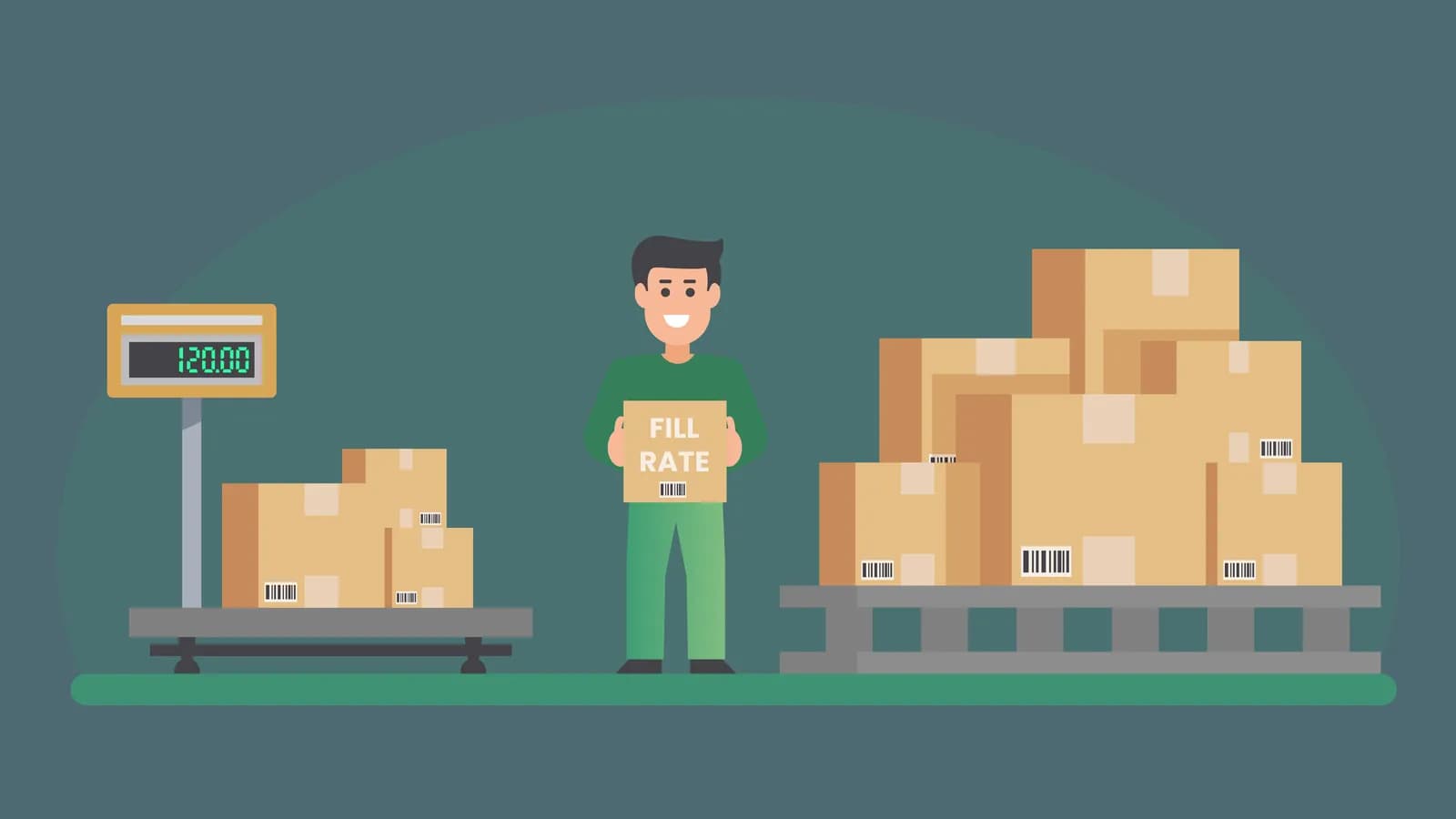
Fill rate is the percentage of customer demand that can be filled straight from available stock. It shows how well a company fulfills orders without shortages, back orders, or cancellations — and it is one of the most widely used supply chain KPIs in wholesale, distribution, and retail.
Fill rate can be measured per product or across all products. Ideally, targets differ by customer segment and product type.
What is the fill rate formula?
The basic formula:
Fill rate (%) = (quantity filled ÷ quantity ordered) × 100%
"Quantity" can mean whole orders, order lines, or units — depending on which fill rate you want to measure.
Worked example
Say a distributor receives 200 orders in a week, totaling 1,000 item lines:
| Type | Filled | Ordered | Fill rate |
|---|---|---|---|
| Order fill rate (complete orders) | 180 orders | 200 orders | 90% |
| Line fill rate (item lines) | 970 lines | 1,000 lines | 97% |
The numbers are illustrative, but they show something important: line fill rate is almost always higher than order fill rate, because a single missing item is enough to count a whole order as unfilled.
What are the types of fill rate?
- Order fill rate — the share of orders filled completely. Closest to the customer's experience.
- Line fill rate — the share of item lines within orders that were filled.
- Case (unit) fill rate — units or cases shipped versus ordered; common for bulk orders to distributors or wholesalers.
- Warehouse fill rate — how well a specific warehouse fills the orders allocated to it.
- Vendor fill rate — how completely a supplier fills your purchase orders.
Why does fill rate matter?
- Reputation. Customers remember suppliers who always deliver complete and on time.
- Loyalty. Stores that keep receiving short shipments look for other suppliers.
- Operational insight. Fill rate per warehouse, product, or supplier shows where the supply chain gets stuck.
- Revenue protection. Every unfilled line is a delayed or lost sale.
How can you improve fill rate?
- Keep stock data accurate. Gaps between system and physical stock lead to accepting orders for goods that aren't there. Run regular stock taking.
- Plan demand. Use sales history and seasonal patterns — such as holiday peaks — to set purchase quantities.
- Hold safety stock for core and fast-moving products.
- Speed up the order flow. The faster orders move from entry to delivery, the less chance stock changes in between.
- Review suppliers using vendor fill rate and agree on targets together.
- Track by segment. Separate priority customers and products so resources stay focused.
How can you monitor fill rate automatically?
Calculating fill rate by hand in Excel every day is hard. With a system that connects orders, stock, and deliveries, ordered versus shipped quantities are recorded automatically:
- Advotics Distribution connects sales orders, stock, delivery orders, and invoices, so partially filled orders are visible immediately.
- Advotics Warehouse tracks stock per SKU and location across warehouses, so shortages can be anticipated before orders come in.
Learn how distributors keep orders filled in What Is a Distributor?. Want to track your fill rate in real time? Contact the Advotics team.
Frequently asked questions
What is fill rate?
Fill rate is the percentage of customer demand filled immediately from available stock. It measures how well a company fulfills orders without shortages, back orders, or cancellations.
What is the fill rate formula?
Fill rate = (quantity filled ÷ quantity ordered) × 100%. The 'quantity' can be whole orders, order lines, or units, depending on which fill rate you measure.
What is the difference between order fill rate and line fill rate?
Order fill rate counts orders filled completely, while line fill rate counts the item lines within orders. An order missing one item fails entirely in order fill rate, but only one line fails in line fill rate.
What is a good fill rate?
There is no single number. Set different targets per customer segment and product type — for example higher for core products and key accounts — and track the trend over time.
How can you improve fill rate?
Keep stock data accurate, plan demand, hold safety stock for fast movers, speed up the order-to-delivery flow, and review supplier performance regularly.